
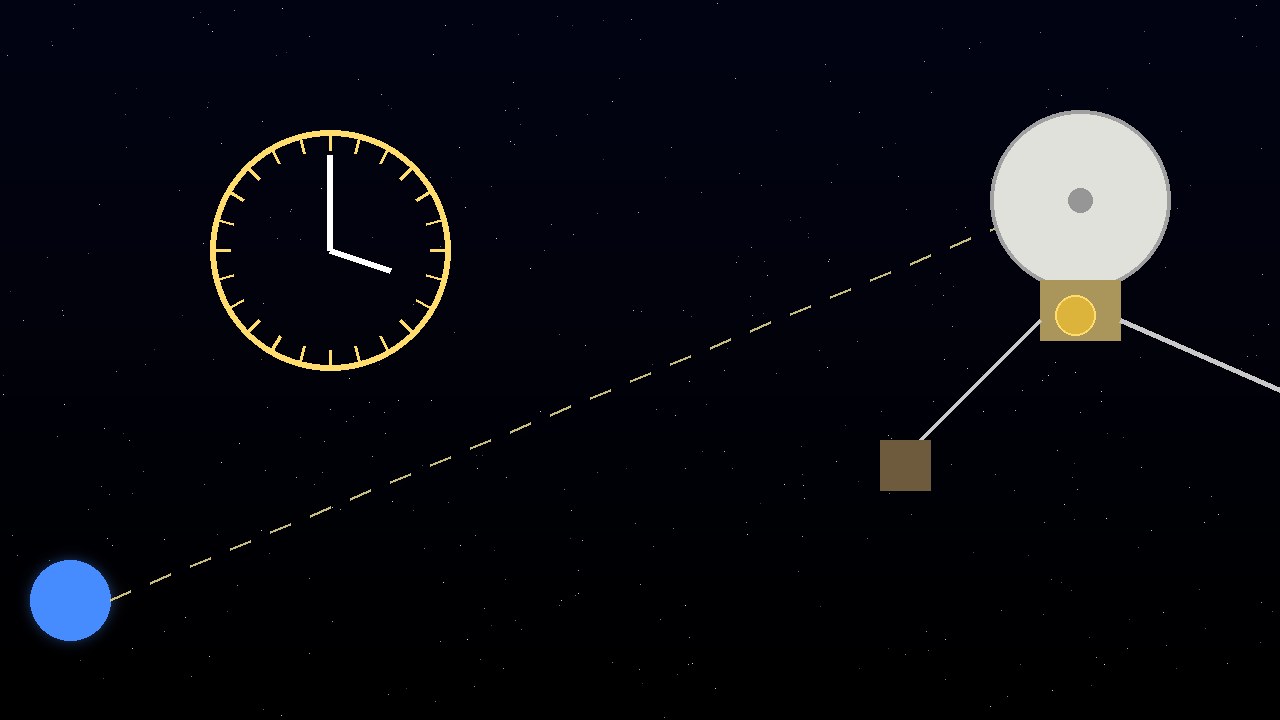
TWENTY-FOUR HOURS AT THE SPEED OF LIGHT! NASA’s Voyager 1 has become the first spacecraft to reach one light-day from Earth, about 16.1 billion miles (25.9 billion km) away, according to NASA via ScienceDaily.
The milestone hit on Nov. 18 at 5:16 a.m. EST. Engineers at NASA’s Jet Propulsion Laboratory got a signal from the probe early Thursday, exactly 24 hours later. Sending a command now takes a day; hearing back takes another. “It just takes a little longer to communicate than it used to,” said Voyager project manager Suzanne Dodd.
The catch: NASA hasn’t received science or engineering data from Voyager 1 since Nov. 14. The probe is still sending its carrier signal, and by tracking that and its trajectory, the team confirmed it crossed the light-day line. Engineers are still investigating why the data isn’t coming through.
Launched in 1977, Voyager 1 crossed out of the Sun’s protective bubble, the heliosphere, in 2012, and it is cruising at about 38,000 mph. Its plutonium power source is roughly 50 years old and both Voyagers lose about four watts a year. After engineers swapped three devices for lower-power alternatives earlier this year, NASA expects enough power to run the current instruments until at least summer 2027, the 50th anniversary of launch.
And it still carries the Golden Record of Earth’s sights and sounds. “One day in the future, when it can no longer communicate with Earth,” Dodd said, “Voyager 1 will become humanity’s silent ambassador to the stars.”
Illustration: Bugle Blast.
Sources: ScienceDaily (NASA release)
Leave a Reply