
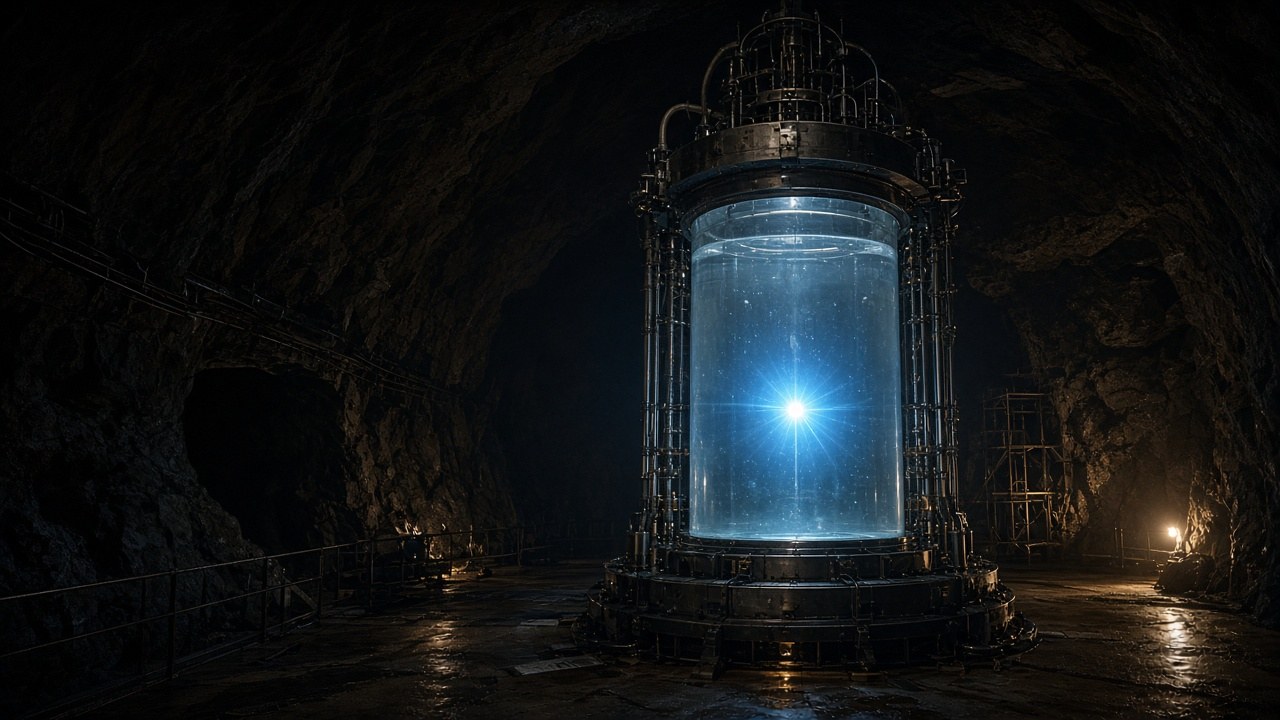
An international team says the LUX-ZEPLIN (LZ) dark-matter detector recorded an unusual particle interaction that could hint at dark matter — the most compelling signal that instrument has seen, CNN reported Monday, citing results presented September 1 at TeV Particle Astrophysics 2026 and a paper submitted to Physical Review Letters.
LZ sits nearly a mile underground at South Dakota’s Sanford Underground Research Facility with about 7 active metric tons of liquid xenon, hunting weakly interacting massive particles (WIMPs). The event, from June 2023 data in a 220-day run (March 2023–April 2024), produced a flash of light; after months of analysis, the collaboration of about 250 scientists estimated only a 0.5% chance a known interference source caused it.
That is still far short of a discovery claim. Particle physics usually requires 5-sigma confidence (about a 1-in-3.5-million fluke); the analysis sits at about 2.6-sigma, or roughly a 1-in-200 chance of a fluke. UCLA’s Alvine Kamaha, an LZ member, said one event alone is not enough — more data and rising significance are needed. Spokesperson Rick Gaitskell said the team is working through a newer ~700-day dataset and using “synthetic” fake signals to fight analysis bias. Independent checks could come from Italy’s XENONnT and China’s PandaX-4T if more candidate collisions appear.
Sources: CNN
Leave a Reply