
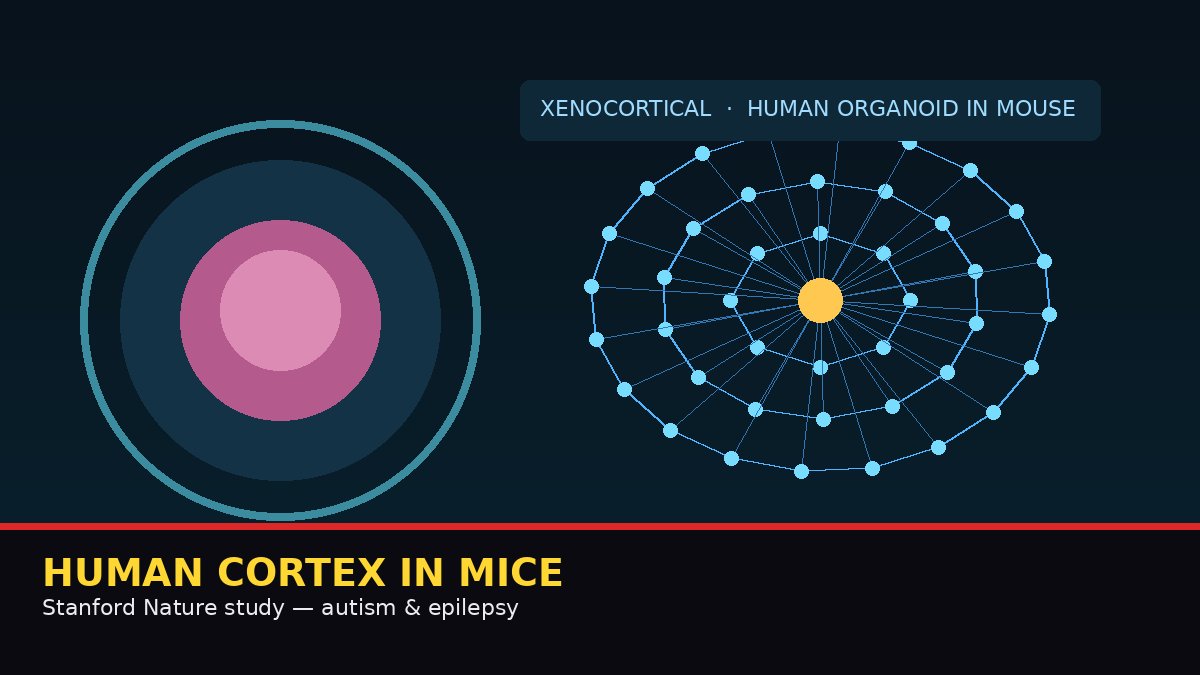
Stanford scientists transplanted lab-grown human cortical organoids into bioengineered mice missing most of their own cerebral cortex and hippocampus — about 98% blocked genetically — and watched the human tissue form working neural networks, Reuters’ Will Dunham reported, citing a Nature study led by senior author Sergiu Pasca.
The human cells produced diverse cortical types, including rare von Economo neurons. The animals still run on a mouse nervous system with a larger volume of human cortical tissue — Pasca warns against calling them “mice with human brains” or mini-brains. The team’s term: “xenocortical” mice. Organoids came from reprogrammed skin or blood stem cells. The mice looked ordinary but showed fine-motor and memory differences.
The aim is to study disorders that start in development — autism, epilepsy, schizophrenia, cerebral palsy — and perinatal oxygen deprivation. Low oxygen injured the human cortical cells and impaired gait and coordination in xenocortical mice, while ordinary mice shrugged it off. Ethicists are watching animal welfare and whether complex human neural tissue could create unexpected properties.
Sources: Reuters
Leave a Reply