
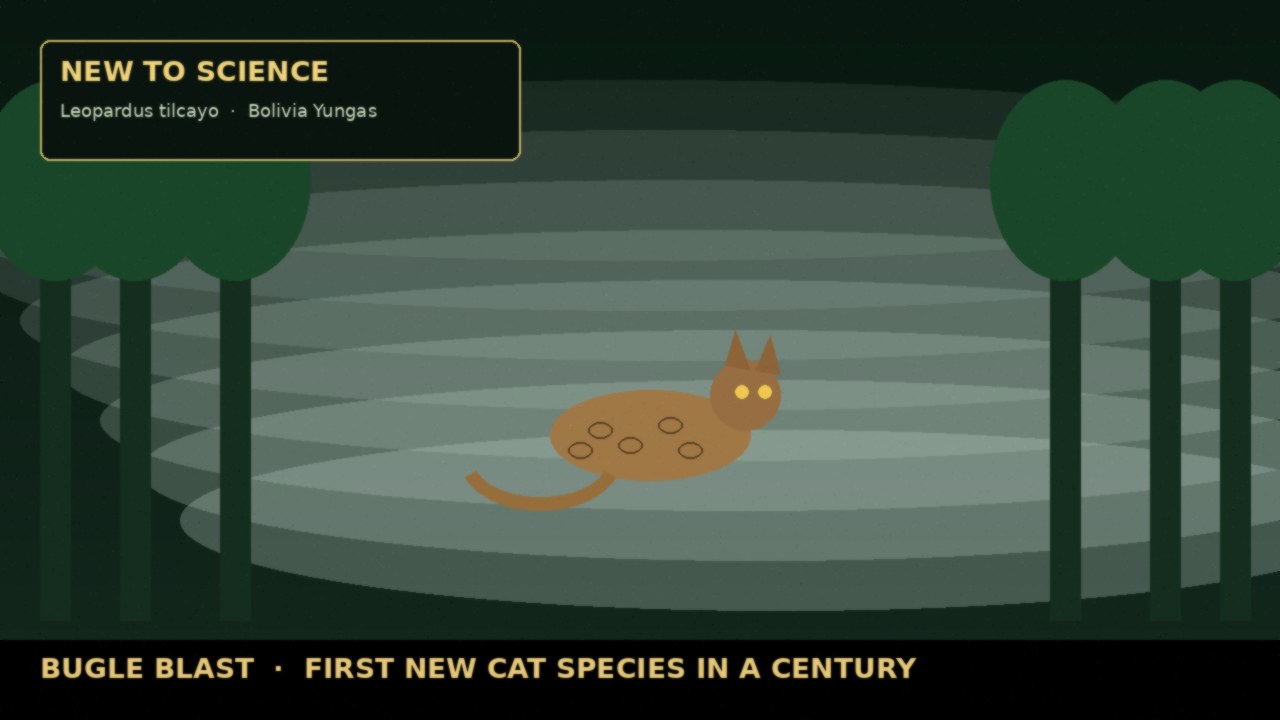
A diminutive wild cat from Bolivia’s Yungas cloud forest has been formally named a new living species — the first time scientists have done that for a cat in more than a century — Reuters and The Hindu reported, citing a study published Thursday in Current Biology.
Called tilcayo by local communities and given the scientific name Leopardus tilcayo, the animal is part of the South American tiger-cat group. It measures about 18 inches (46 cm) long and weighs around 3 pounds (1.4 kg), smaller than a typical house cat, with light-brown fur and irregular rosettes. National Geographic Explorer Paola Nogales-Ascarrunz and colleagues used genetic data from 38 cats across several countries, including museum specimens, and found tiger cats are five genetically distinct species — not one. Genetic analysis suggests the tilcayo lineage split from other tiger cats about 1.4 million years ago. The team also described a new Peruvian subspecies, Leopardus tigrinus antisuyo.
Little is known about the cat’s lifestyle; rodent remains in scat and camera traps hint at a nocturnal diet. One live individual is a 10-year-old male at Senda Verde Wildlife Sanctuary after living with a local family. IUCN currently lists tiger cats as two vulnerable species; researchers say an upcoming review of the five lineages separately could find tilcayo endangered on its own as Yungas forests face deforestation, fire, agriculture, and mining.
Sources: Reuters; The Hindu (Reuters); Al Jazeera; Current Biology
Leave a Reply