
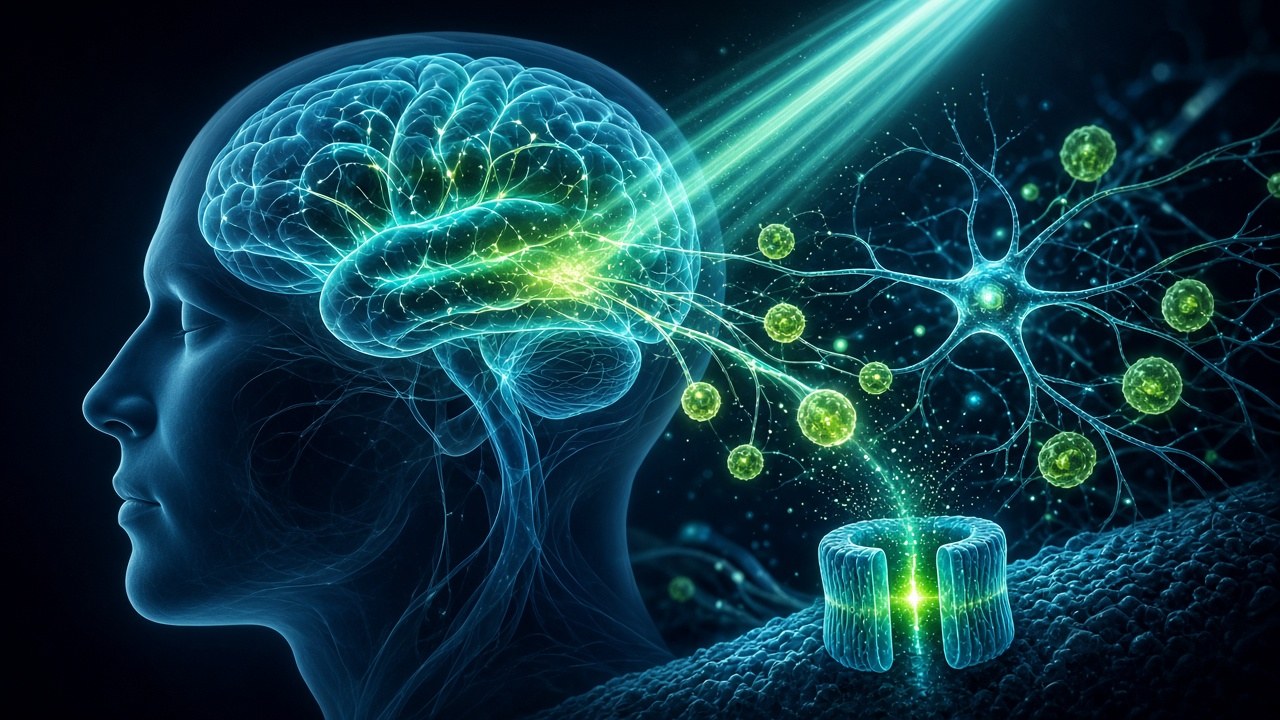
Stockholm just handed the first Nobel of the year to the folks who turned a flashlight into a brain switch. American Karl Deisseroth and Germans Peter Hegemann and Georg Nagel won the 2026 Nobel Prize in Physiology or Medicine on Monday for “discoveries concerning light-gated ion channels and optogenetics,” Reuters reported.
“This method makes it possible to switch on, or off, the activity of individual nerve cells in a living brain,” said Thomas Perlmann, Secretary-General of the Nobel Assembly at Karolinska Institutet. The trio — ages 54, 71 and 73 — split 12 million Swedish crowns (about $1.2 million).
The origin story starts with pond scum. In the early 1990s Hegemann studied how the alga Chlamydomonas reacts to light in half a millisecond. Nagel injected its genes into frog eggs and found channelrhodopsin-2, a light-sensitive ion channel. In 2003 they showed it could fire electrical impulses in human and hamster cells; two years later Deisseroth made it work in rat neurons at Stanford, and the field got its name in 2006.
Labs now use it to probe schizophrenia, Alzheimer’s, Parkinson’s, epilepsy and addiction in animal models, and it has been used to partially restore vision in blind patients with retinitis pigmentosa. The reality check: the most advanced therapies — MapLight’s autism program and Nanoscope’s vision drug — are “still some time away” from patients. Physics, chemistry, literature, peace and economics prizes follow this week; Peace lands Friday.
Sources: Reuters
Leave a Reply