
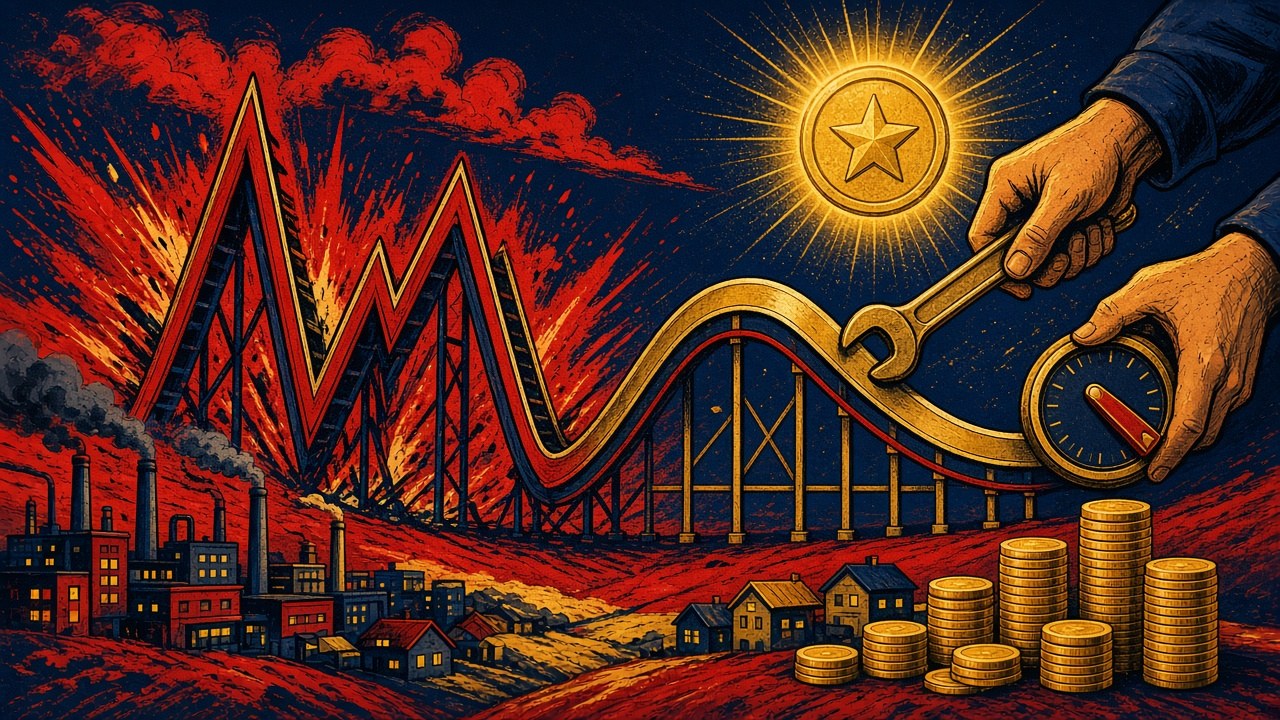
The last Nobel of the season just went to the people who try to keep your economy from flipping its lid. The Royal Swedish Academy of Sciences awarded the 2026 economics prize to Robert E. Hall of Stanford and Michael Woodford of Columbia “for microeconomic foundations of macroeconomic stabilisation,” the Nobel Prize press release said Monday.
Translation: instead of building economic models on loose statistical links between inflation, output and consumption, the pair built them from the ground up, on how millions of households and businesses actually make forward-looking decisions. The Academy says those models make well-timed fiscal and monetary moves better at shaving down the economy’s peaks and troughs.
They also showed how what central banks and governments say shapes people’s view of the future and can nudge the economy in the right direction, CNBC reported. “With them, we are better equipped to deal with shocks in the economy, such as energy crises or sudden changes in how much households consume,” prize committee chair John Hassler said.
Hall, born in 1943 in Palo Alto, and Woodford, born in 1955 in Chicopee, Massachusetts, both earned PhDs at MIT. They’ll split 12 million Swedish kronor, about $1.2 million.
Energy shock, war in the Gulf, wobbly bond market — the Academy picked a very on-the-nose year to hand out a medal for smoothing the ride.
Sources: NobelPrize.org — Prize in Economic Sciences 2026 press release (Oct. 12, 2026) · Royal Swedish Academy of Sciences (Oct. 12, 2026) · CNBC — Nobel prize in economics awarded to Robert E. Hall and Michael Woodford (Oct. 12, 2026)
Featured image: AI-generated editorial illustration by Bugle Blast.
Leave a Reply